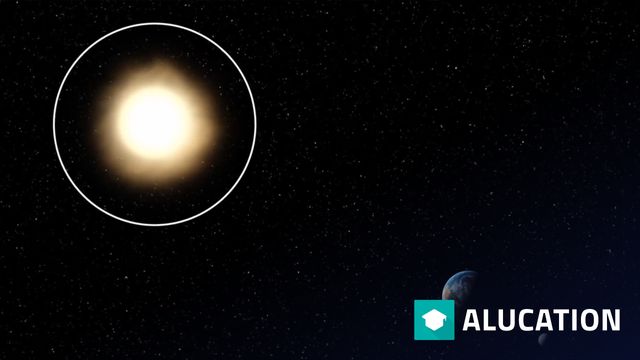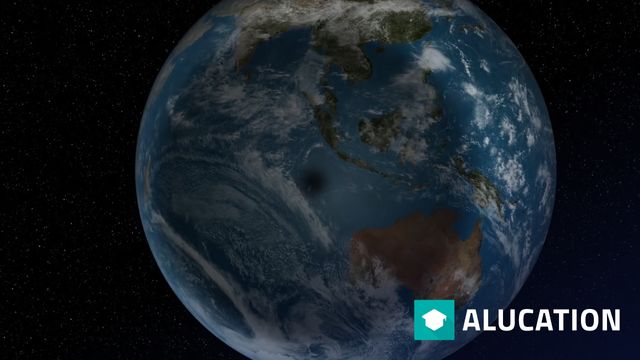
Search results for “éclipse solaire”

ScienceCasts: Indonesian Solar Eclipse

During the early hours of March 9, 2016 the new moon will pass directly in front of the sun, producing a total eclipse of the sun over South East Asia. A partial eclipse will be viewable the evening of March 8, 2016 in westernmost parts of the USA including Alaska and Hawaii. Click here to see mor

Total Solar Eclipse Animation

Solar eclipses result from the alignment of the Sun, Moon, and Earth. Total solar eclipses — in which the Sun is completely blocked by the Moon — are a spectacular and rare sight to witness. In this animation adapted from NOVA, see why solar eclipses occur and observe a simulated total eclipse. This

ScienceCasts: Southern Hemisphere Solar Eclipse

Visit http://science.nasa.gov/ for more. On Sunday, February 26th, the moon will pass in front of the sun, transforming rays of sunlight across parts of South America, southern Africa and Antarctica into fat crescents and thin rings of light. Click here to see more videos: https://alugha.com/NASA

ScienceCasts: The 2017 Total Solar Eclipse

On August 21, 2017, a continent-spanning wave of instruments from home-made pinhole cameras to the most sophisticated telescopes in operation today will be trained on the Eclipse Across America. Click here to see more videos: https://alugha.com/NASA Visit http://science.nasa.gov/ for more. eclips

Lunar Eclipse Essentials | NASA Planetary Sciences

Discover what happens during a lunar eclipse in this video from NASA. The orbit of the Moon around Earth causes the monthly phases of the Moon; lunar eclipses occur when the Moon passes through Earth's shadow. The video shows how the appearance of the Moon changes as it passes through Earth's penumb

ScienceCasts: August 2017: A Big Month for Astronomy

Click here to see more videos: https://alugha.com/NASA Visit http://science.nasa.gov/ for more. The Perseid meteor shower will peak on August 11, 12, and 13, and a Total Solar Eclipse will be visible in the United States from coast to coast on August 21. (This video is from 2017)

ScienceCasts: A Supermoon Trilogy

Visit http://science.nasa.gov/ for more. A series of three supermoons will appear on the celestial stage on December 3, 2017, January 1, 2018, and January 31, 2018. Click here to see more videos: https://alugha.com/NASA