Q12 Calculation with Titration Curves - Part 6
Part 6 on acid-base titrations. An Abituary task from Bavaria 2012 is calculated! Original: "Wolfgang Dukorn" Original: German. All translations in this video have been done by the alugha AI.
Part 6 on acid-base titrations. An Abituary task from Bavaria 2012 is calculated! Original: "Wolfgang Dukorn" Original: German. All translations in this video have been done by the alugha AI.
http://www.hoTodi.tv shows how it's done! Now that we have mastered the plucking hand and the fretting hand, we will continue with notes. The C major scale plays a special role here, because basically everything is based on it. As the basis for all other scales, tones and notes, everything stems fro
http://www.hoTodi.tv shows how it's done! Now that we are familiar with notes, the fretting hand and plucking hand, let's continue with some important basics. Today, we are going to learn what a root, a fifth and a concave is. is. We will play them on the strings and learn how to transpose them. H
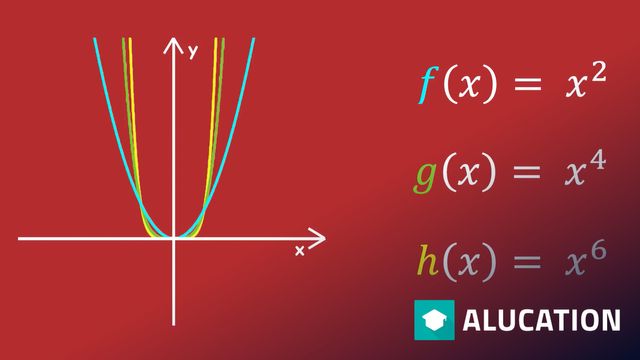
Power functions simply explained graphically - positive/negative odd/even exponents & examples. The equation of a power function is f(x)=ax^n. a is the prefactor, n is an exponent. x^2 or x^4 are functions with positive even exponents, x^3 or x^5 are functions with positive odd exponents. x^-2 or x^
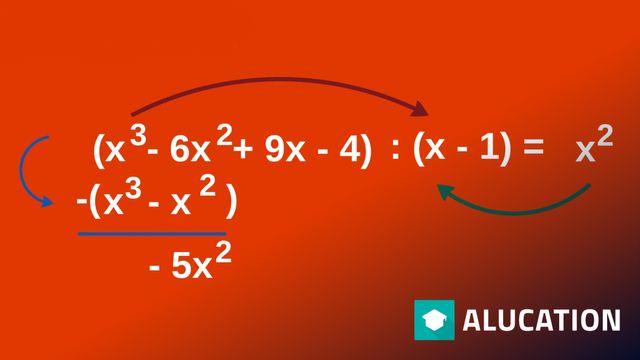
Polynomial division without remainder simply explained - theory, examples and exercise - Math Upper School & University. In polynomial division you need three steps: Divide, Multiply, Subtract. Without remainder means that there must be a 0 under the last streak. With the help of two examples and ex
http://www.hoTodi.tv shows how it's done! Now that we are familiar with notes, the fretting hand and plucking hand, let's continue with some important basics. Today, we are going to learn what a root, a fifth and a concave is. is. We will play them on the strings and learn how to transpose them. H
http://www.hoTodi.tv shows how it's done! We are still learning the theory but in keeping with the following motto: You really want to learn something! In our second part of Bobby's Bass, Ralf Bopp gives some tips on how to really learn to play the bass. Be it a metronome or a bass diary... But do
Polynomial division with remainder simply explained - theory, examples and calculation - math high school & university. Polynomial division requires three calculation steps: division, multiplication, subtraction. With remainder means that a number remains below the last bar. Using examples and exerc