Search results for “Heliophysics”

NASA ScienceCasts: Follow the Sun

The TSIS instrument on the International Space Station is continuing NASA's 40-year record of tracking the Sun's radiant energy. ISS Science: http://www.nasa.gov/iss-science NASA Science: http://science.nasa.gov/ Click here to see more videos: https://alugha.com/NASA

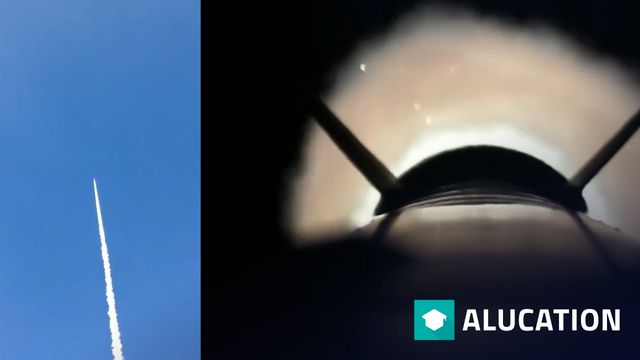
NASA ScienceCasts: On the Cusp of Understanding

NASA is using sounding rockets to study the cusp, a point where the magnetic bubble that surrounds our planet dips inward and touches down to Earth. NASA Science: http://science.nasa.gov/ Click here to see more videos: https://alugha.com/NASA

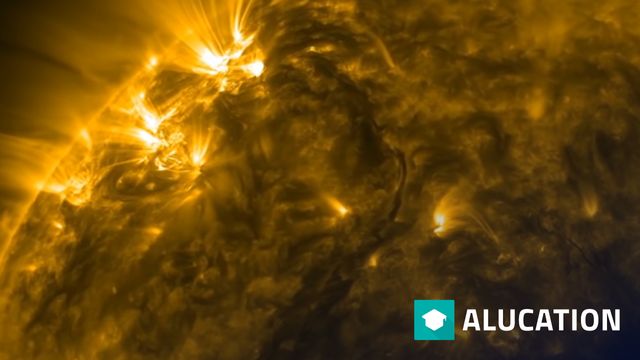
ScienceCasts: The Mystery of Coronal Heating

Observations by NASA's IRIS spacecraft suggest that "heat bombs" are going off in the sun's outer atmosphere, helping to explain why the solar corona is so mysteriously hot. Click here to see more videos: https://alugha.com/NASA Visit http://science.nasa.gov/ for more. https://iris.gsfc.nasa.gov/

ScienceCasts: The 2017 Total Solar Eclipse

On August 21, 2017, a continent-spanning wave of instruments from home-made pinhole cameras to the most sophisticated telescopes in operation today will be trained on the Eclipse Across America. Click here to see more videos: https://alugha.com/NASA Visit http://science.nasa.gov/ for more. eclips
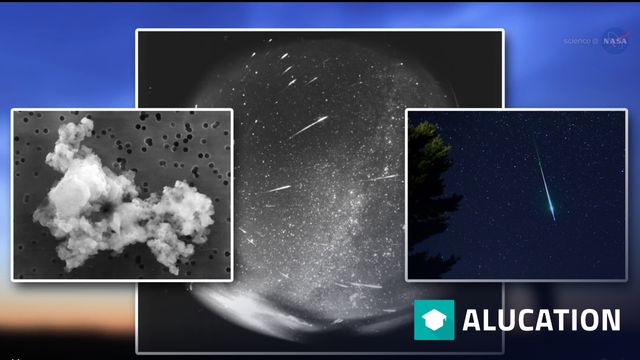
NASA ScienceCasts: The Space We Travel Through

As NASA prepares to send astronauts and spacecraft long distances through space, scientists are keeping an eye on the weather. Space weather. NASA Science: http://science.nasa.gov/ Click here to see more videos: https://alugha.com/NASA

ScienceCasts: NASA Spacecraft Fly in Record-setting Formation

MMS: http://www.nasa.gov/mms Visit http://science.nasa.gov/ for more Four NASA spacecraft have performed a thrilling maneuver to understand the physics of explosive reconnection in Earth's magnetosphere. Read this story: https://science.nasa.gov/news-articles/nasa-spacecraft-fly-record-setting-fo

ScienceCasts: Listening to the Stars

Visit http://science.nasa.gov/ for more. Deep in the heart of California’s Owens Valley, a strange-looking telescope stands in the desert landscape listening for echos of distant stars. Click here to see more videos: https://alugha.com/NASA

ScienceCasts: Southern Hemisphere Solar Eclipse

Visit http://science.nasa.gov/ for more. On Sunday, February 26th, the moon will pass in front of the sun, transforming rays of sunlight across parts of South America, southern Africa and Antarctica into fat crescents and thin rings of light. Click here to see more videos: https://alugha.com/NASA

ScienceCasts: Solar Minimum is Coming

Intense solar activity such as sunspots and solar flares subsides during solar minimum, but that doesn’t mean the sun becomes dull. Solar activity simply changes form. Click here to see more videos: https://alugha.com/NASA Visit http://science.nasa.gov/ for more.

ScienceCasts: Ocean Worlds

Visit http://science.nasa.gov/ for more. We once thought oceans made our planet unique, but we’re now coming to realize that ‘ocean worlds’ are all around us. Click here to see more videos: https://alugha.com/NASA

ScienceCasts: The 2016 Transit of Mercury

Click here to see more videos: https://alugha.com/NASA Visit http://science.nasa.gov/ for more. On May 9th (2016), Mercury will move across the face of the sun, offering a rare viewing opportunity for professional astronomers and backyard sky watchers alike. 2016 Mercury Transit: http://mercurytr

ScienceCasts: NASA Embraces Small Satellites

Visit http://science.nasa.gov/ for more. NASA is embracing small satellite designs, from tiny CubeSats to micro-satellites. These miniature marvels are providing many ways to collect science data and to demonstrate new technologies. Click here to see more videos: https://alugha.com/NASA