Search results for “Income distribution”

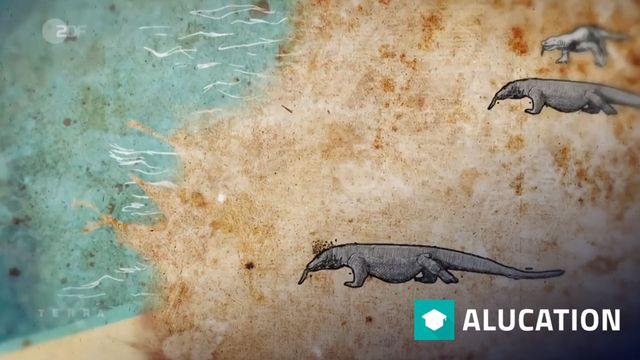
The Distribution of Komodo Dragons

Komodo dragons mainly live on the island of Komodo, after which they are named. But fossils show they were once much more widespread. Their ancestors originated in Australia. Authors: ZDF/Terra X/R. Rauert/Marc Trompetter/Maximilian Heß Translation and dubbing: alugha Click here to see more video

Giraffe species and distribution

In the 18th century, giraffes were widespread in sub-Saharan Africa. In the meantime, their habitat has shrunk considerably. Until 2016, only one species with nine subspecies was known. DNA tests, however, prove that there are four different species. Author: ZDF/Terra X/R.Marel/C.Gerisch/SpiegelTV/

The Robin Hood Myth - Milton Friedman's Theory

State social programs help the poor at the expense of the rich - or so one might think. The economist Milton Friedman called this the Robin Hood myth. As an example, he cited state-funded higher education, pointing out that people from upper-middle-class families often benefit the most, while low-in

The Octet Rule

The video explains the electron distribution according to Bohr's atomic model of noble gas atoms, the noble gas configuration and the octet rule. Original: "Chemistry and biology - get it!" Original: German. All translations in this video have been done by the alugha AI.

Is This Just Rent Seeking

YOUR CLARK LINK: https://clarkwp.wpenginepowered.com/landing/social/sprouts_deutschland/?utm_source=instagram&autm_campaign=bc-45-3-x Rent-seeking is a behavior that describes the tendency of people to make profits without doing any real work. This reduces economic efficiency through the misallocat

How Uneducated Is Our Planet?

Although worldwide education rates have gone up, we still have a LONG way to go. Click here to see more videos: https://alugha.com/LifeNoggin Follow Life Noggin! Facebook: https://www.facebook.com/LifeNoggin/?ref=br_rs Instagram: https://instagram.com/lifenoggin/ Twitter: https://twitter.com/li

The Pareto Principle - The 2080 Rule

The Pareto Principle, also known as the 80/20 rule, states that often 20% of causes produce about 80% of the results, while the remaining causes are responsible for the rest. Discovered by the Italian economist Vilfredo Pareto, the principle became a valuable rule of thumb that helps our minds under