Search results for “Instructions”

Active learning

"Active learning" means getting involved, collaborating with others, and implementing concepts in the real world. It is intellectual hard work. But it allows you to remember the content better, understand it better and transfer it to other situations. Why does it work so well? We take a look at th

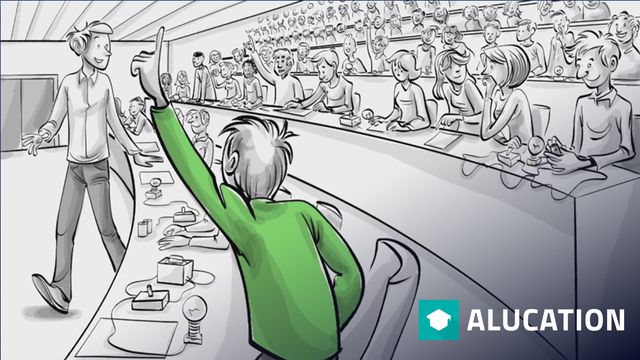
The Active Learning Method

"Active learning" means you participate, collaborate with others, and apply concepts to the real world. It requires hard mental effort but leads to better retention and an understanding of the material that can be transferred to other situations. To explain how to apply Active Learning in classrooms

10 Mechanism of radical substitution

In the screencast, the mechanism of radical substitution is explained using the example of the reaction ethane with bromine. This screencast is essentially used to follow up on the content worked on in class. Original: "Wolfgang Dukorn" Original: German. All translations in this video have been do

08 States of Matter and Transitions

The simple particle model is used to describe the states of matter. The individual states of matter are briefly described and their transitions are explained. The direct transition from solid to gaseous is described using iodine as an example. Original: "Wolfgang Dukorn" Original: German. All tran

Q12 Strength of acids

A small experiment illustrates the different strengths of the acids. At the end there is a small work assignment. Original: "Wolfgang Dukorn" Original: German. All translations in this video have been done by the alugha AI.

09 Intermolecular Interactions

Van der Waals forces, dipole-dipole interactions and hydrogen bonds are explained. It is briefly repeated again how the polarity of molecules can be determined. Original: "Wolfgang Dukorn" Original: German. All translations in this video have been done by the alugha AI.