Search results for “Mobile Phone (Invention)”

Can using your cell phone give you brain cancer?

Is using a cell phone harmful to your health? In the first of a two-parter, Risk Bites looks at the chances of your cell phone giving you brain cancer (spoiler alert: not a lot). Next time -- the more worrisome risk of your phone placing you in a life or death situation. Note: The video refers t

Is using a phone while driving dangerous?

Is using a phone while driving dangerous? In the second of a two-parter, Risk Bites looks at cell phone use and distracted driving. This week's Risk Bites team: David Faulkner (Script, post-production) Ray Bingham (Technical Advice) Andrew Maynard (all the other stuff) Additional information:

Electromagnetic fields of mobile communications

Being able to make phone calls anywhere and at any time has now become a matter of course. Mobile communications are now part of our everyday lives. But how does mobile communications work? How does it affect humans? How can we protect ourselves from the effects of mobile communications? The video

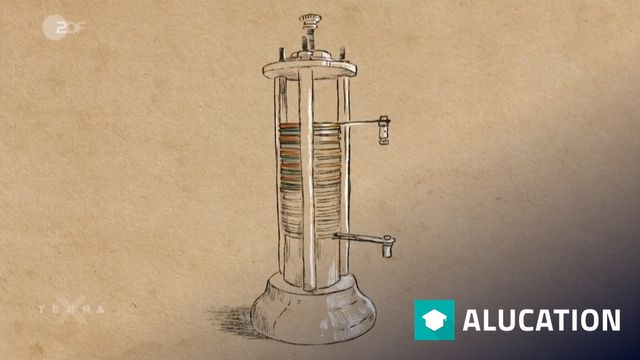
The invention of the battery

By layering copper disks, cardboard dipped in acid and zinc disks, physicist Alessandro Volta invented the so-called "voltaic pile," the world's first battery. Author: ZDF/scobel/Claus Ast/Tamara Skalski/Maximilian Mohr Translation and dubbing: alugha Click here to see more videos: https://alugha

Mobile communications and health

Is 5G dangerous? What are frequencies in mobile communications all about and what effects do they have on humans? In the video, our colleague Alexander Leymann explains what the electromagnetic fields with which mobile communications actually work. In addition, what effects there are and how all thi

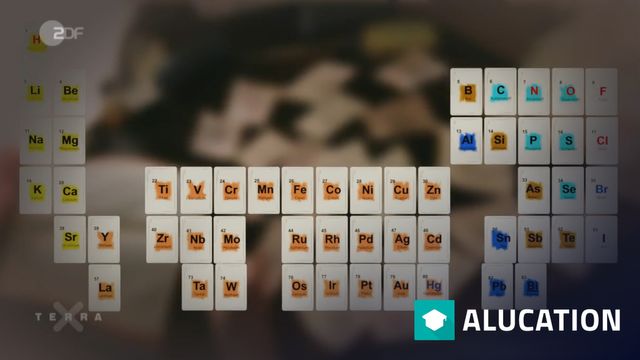
Invention of the periodic table

In the mid-19th century, the nature of the elements was still largely unknown. In 1869, Russian chemist Dimitri Mendeleev develops the periodic table, which is still valid today with slight adjustments. Authors: ZDF/Terra X/T. Schrader/J. Koester/F. Steinhardt/Caligari/Moods in Pictures/Maximilian

Mauvein: The Invention of the First Synthetic Dye

In the mid-19th century, chemical assistant Henry Perkin was looking for an synthetic substitute for an antimalarial drug. But instead of quinine, he produces the first synthetic dye: mauveine. An accidental product! Authors: ZDF/Terra X/T. Schrader/J. Koester/F. Steinhardt/Moods in Pictures/Maximi

Radiation - what is it actually

Tim's sister Vicky works in radiation research. She shows him where we encounter radiation everywhere - and what it actually is. #strahlenschutz #strahlung #radioaktivität #radioaktiv #uv #mobilfunk #handy #röntgen Original: "Federal Office for Radiation Protection" Original: German. All translat