Search results for “Sailing voyage”

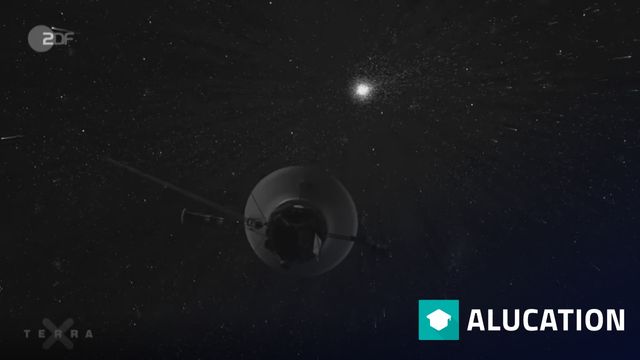
Voyager 2 and the scale of the solar system

In 1977, NASA's Voyager 2 space probe began its journey to the planets of our solar system. But the probe also provides clues about the solar system beyond the planets. Author: ZDF/Terra X/C. Haak/A.M. Wendlandt, Nikolai Holzach Translation and redub: alugha Click here to see more videos: https:
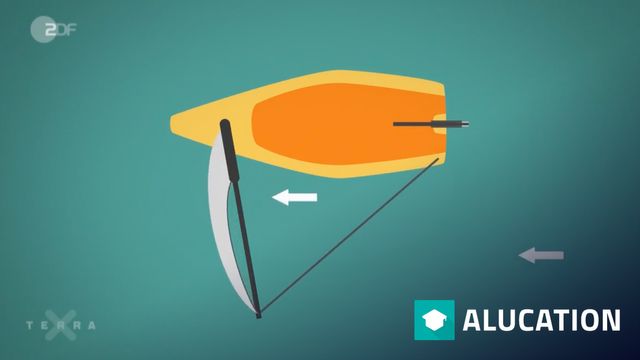
Propulsion effects in sailing

Sailing uses two propulsion effects: Drag and lift in combination. Wind pressure and air flow are responsible for the movement. Author: ZDF/Pur+/Autorenkombinat/Tobias Schönke/Rita Gerhardus-Faust/Jochen Schmidt Translation and dubbing: alugha Click here to watch more videos: https://alugha.com/T

Voyager: Humanity's Farthest Journey | NASA Planetary Sciences

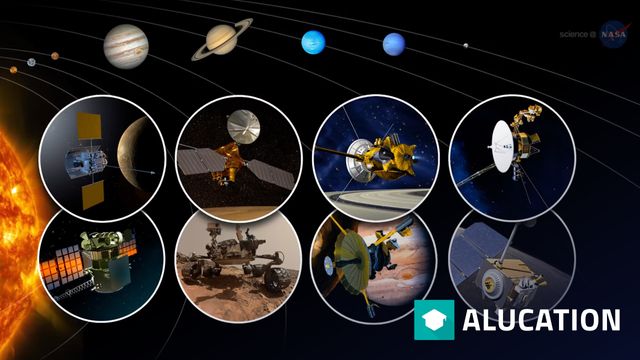
In 1977, The Voyager program sent two spacecraft to explore the solar system and travel to interstellar space. In this video from NASA's Jet Propulsion Laboratory, learn how Voyager 1 and Voyager 2 are now the farthest any spacecraft has traveled from the Sun, and are still making discoveries in the

Columbus’ Discoveries

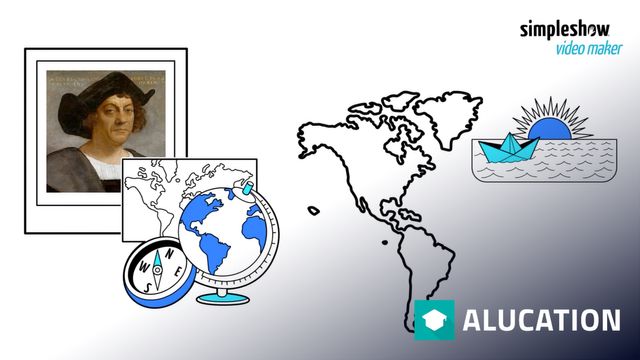
On August 3rd, 1492, Christopher Columbus set sail from Palos, Spain, with three ships seeking a westerly route to the Far East. His voyages revealed two continents new to Europeans and initiated a period of rapid exploration. Our video explains this discovery. #ChristopherColumbus #columbus #discov

ScienceCasts: Views of Home

Cameras on NASA spacecraft have treated us to intriguing and inspiring perspectives of our home planet as they've looked back at Earth from various locales. Visit http://science.nasa.gov/ for more. Click here to see more videos: https://alugha.com/NASA

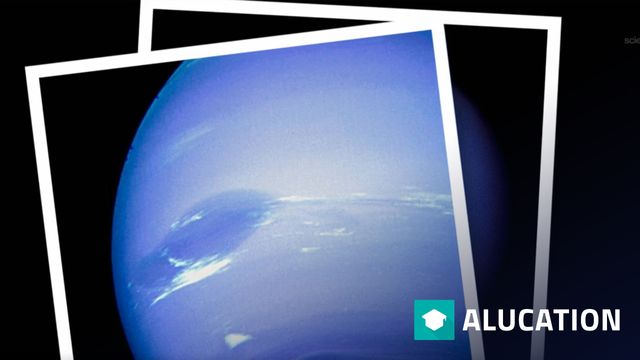
First Spacecraft at Neptune | NASA Planetary Sciences

Learn about the Voyager 2 mission to Neptune in this video from NASA. Voyager 2 reached Neptune in 1989, 12 years after launch, and the flyby was the first and only time a spacecraft has visited Neptune. The planet appears blue because of the methane in its atmosphere. Voyager 2 discovered at least

First Spacecraft at Uranus | NASA Planetary Sciences

Explore the planet Uranus through information gathered by the Voyager 2 spacecraft that first reached the planet in January 1986, more than eight years and 2 billion miles after its launch. As the animation explains, Uranus spins like a top tilted on its side and has a peculiar magnetic field. Rings

NASA ScienceCasts: Eye on Neptune

Click here to see more videos: https://alugha.com/NASA Neptune will be at opposition in September, providing sky watchers and astronomers the opportunity to observe this planet that is invisible to the naked eye, but that scientists would love to see more clearly. NASA Science: http://science.nasa

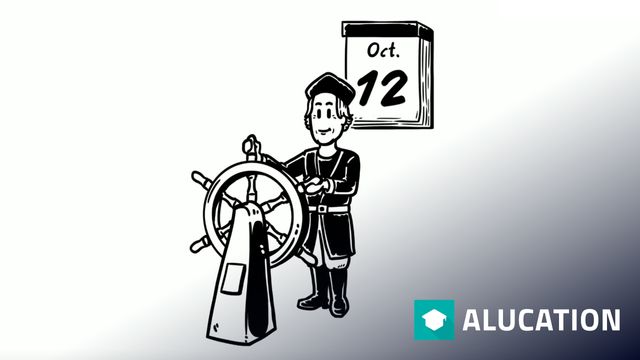
October 12 - Christopher Columbus

Christopher Columbus was an Italian explorer, navigator, and colonist who completed four voyages across the Atlantic Ocean under the auspices of the Catholic Monarchs of Spain. This simpleshow explains the basic facts about his expedition and how he influenced the history as well as our culture tod

Measuring Distance in the Solar System | NASA Planetary Sciences

Explore how astronomers and scientists use astronomical units to measure distances in the solar system in this video adapted from NASA. The astronomical unit (au) -- equal to the average distance from Earth to the Sun -- is a convenient unit of measure when talking about distances in the solar syste

Mercury's MESSENGER Reveals Mysteries | NASA Planetary Sciences

Explore what makes Mercury so mysterious and what scientists are learning from NASA's first Mercury mission in 30 years. For the MESSENGER mission, NASA launched a probe and guided it toward Mercury using a technique called "solar sailing." The probe is studying the make-up of the planet's inner cor

The Solar System's Boundaries | NASA Planetary Sciences

Discover what happens at the outer edges of our solar system, where the solar wind interacts with interstellar space. The Interstellar Boundary Explorer (IBEX) is a mission to study the boundary between the solar system and interstellar space. Voyager 1 and 2 have provided some direct measurements f