Search results for “Spacecraft”

First Spacecraft at Neptune | NASA Planetary Sciences

Learn about the Voyager 2 mission to Neptune in this video from NASA. Voyager 2 reached Neptune in 1989, 12 years after launch, and the flyby was the first and only time a spacecraft has visited Neptune. The planet appears blue because of the methane in its atmosphere. Voyager 2 discovered at least
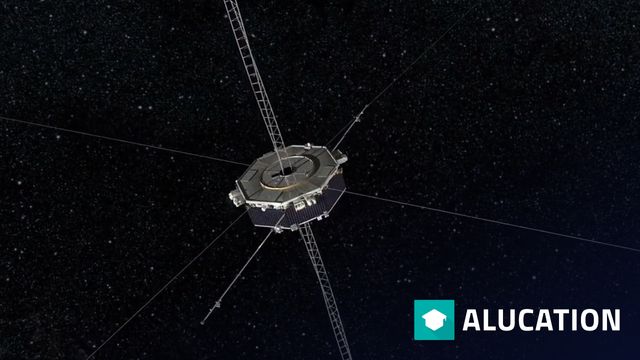
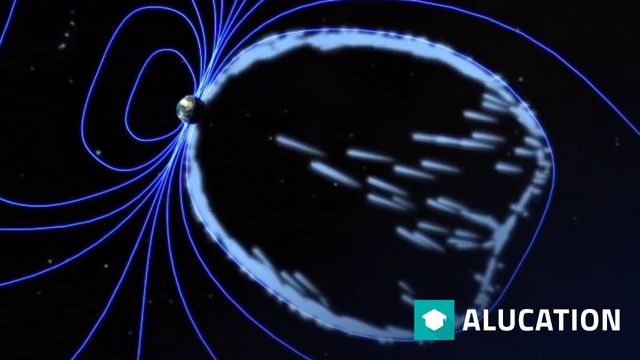
ScienceCasts: NASA Spacecraft Fly in Record-setting Formation

MMS: http://www.nasa.gov/mms Visit http://science.nasa.gov/ for more Four NASA spacecraft have performed a thrilling maneuver to understand the physics of explosive reconnection in Earth's magnetosphere. Read this story: https://science.nasa.gov/news-articles/nasa-spacecraft-fly-record-setting-fo

First Spacecraft at Uranus | NASA Planetary Sciences

Explore the planet Uranus through information gathered by the Voyager 2 spacecraft that first reached the planet in January 1986, more than eight years and 2 billion miles after its launch. As the animation explains, Uranus spins like a top tilted on its side and has a peculiar magnetic field. Rings

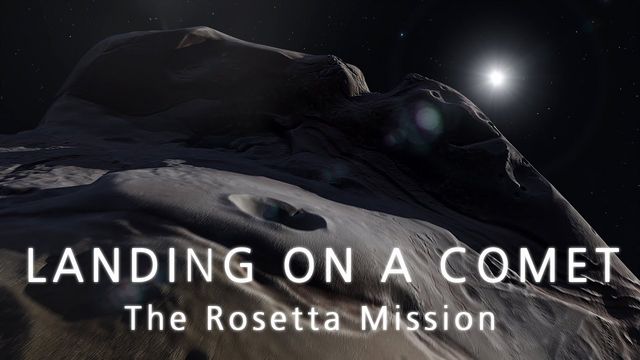
LANDING ON A COMET - The Rosetta Mission

+++ Update +++ Rosetta's lander Philae is safely on the surface of Comet 67P/Churyumov-Gerasimenko, as these first two CIVA images confirm. One of the lander's three feet can be seen in the foreground. DLR's Rosetta special http://www.dlr.de/en/rosetta ------------ After a 10-year journey of some

Should NASA Spend Billions To Explore The Sun?

NASA recently announced a plan to send a probe to our Sun! Is this even worth the money? Click here to see more videos: https://alugha.com/LifeNoggin Follow Us! https://twitter.com/LifeNoggin https://facebook.com/LifeNoggin https://www.instagram.com/lifenoggin Life Noggin is a animated educationa

Voyager: Humanity's Farthest Journey | NASA Planetary Sciences

In 1977, The Voyager program sent two spacecraft to explore the solar system and travel to interstellar space. In this video from NASA's Jet Propulsion Laboratory, learn how Voyager 1 and Voyager 2 are now the farthest any spacecraft has traveled from the Sun, and are still making discoveries in the

Mapping the Moon's Gravity | NASA Planetary Sciences

Launched in September 2011, find out about the Gravity Recovery and Interior Laboratory (GRAIL) mission to measure the gravitational field of the Moon and study how the Moon developed over time. Animations illustrate technical aspects of the mission's design, including the launch, orbital insertion

Saturn's Rings and Moons | NASA Planetary Sciences

Explore the rings and moons of Saturn through images from the Cassini spacecraft. Saturn's rings were discovered in 1610 by Galileo Galilei, although he did not see enough detail to know what they were. In 2004, the Cassini spacecraft began capturing unprecedented images of Saturn's atmosphere and t

Measuring Mars's Magnetic Field | NASA Planetary Sciences

Learn about the Mars Atmosphere and Volatile EvolutioN (MAVEN) mission to Mars in this video from NASA's Goddard Space Flight Center. Mars does not have a global magnetic field like Earth but does have patches of magnetic fields. Scientists use magnetometers to study the planet's magnetic anomalies.