Search results for “Stephen Hawking”

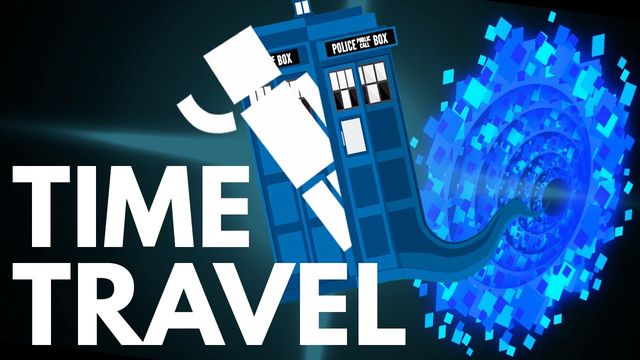
Why Don't Time Machines Exist Already?

Right now, you are traveling through time. But could we travel back in time, or far into the future with new technology? Click here to see more videos: https://alugha.com/LifeNoggin Follow Us! https://twitter.com/LifeNoggin https://facebook.com/LifeNoggin Life Noggin is a weekly animated educat


Nietzsche: God is dead

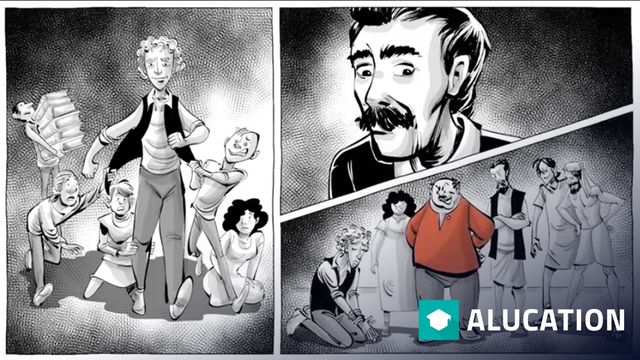
"God is dead. God remains dead. And we killed him," wrote Friedrich Nietzsche in 1882. To understand what the German philosopher meant and what he thought about man, morality and society as a whole, we collaborated with Professor Stephen Hicks for this Sprouts special series. Support us on Patreon

Nietzsche: Masters and Slaves

What if morality is just a fiction used by the herd of inferior humans to hold back the few superior humans? In this final part of our Sprouts special with Stephen Hicks, we examine Nietzsche's explanation of how ethics evolves and the consequences for master types living in a world ruled by slave m

Nietzsche: Master and Slaves

What if morality is just a fiction used by the herd of inferior human beings to hold back the few superior men? In this Sprouts special with Stephen Hicks, we examine Nietzsche’s explanation for how ethics develop and the consequences for master types living in a world that’s dominated by the morali

The Seven Principles of Persuasion

The principles of persuasion are a set of psychological rules to influence others. In his book "Influence", Robert Cialdini presents 6 main principles: reciprocity, scarcity, authority, consistency, sympathy and consensus. Later, he added a 7th principle: uniformity. Knowing these rules can be helpf

Libet Experiment - Neuroscience and Free Will

In 1980, Benjamin Libet wanted to find out whether our brains were preparing for movement before we were aware of it. He set up an experiment to monitor brain activity and found that our brain becomes active 500 milliseconds before the conscious decision to move. What does this say about free will?

Graham's hierarchy of disagreement

When you discuss a topic and everyone agrees, the conversation often falls silent quickly. However, if you disagree, you contradict what has been said, and the discussion continues. Paul Graham, a computer engineer, therefore proposed a "hierarchy of disagreements" in 2008. Figure out at what level

Gender differences

Gender roles have evolved throughout history and societies, but biological differences remain. How do these differences affect our lives and our bodies? And what differences are due to social pressure and upbringing? Become a "Change Maker" and support Sprouts with a membership: / @sproutsdeutsc