Search results for “host”

What are viruses and how do they attack?

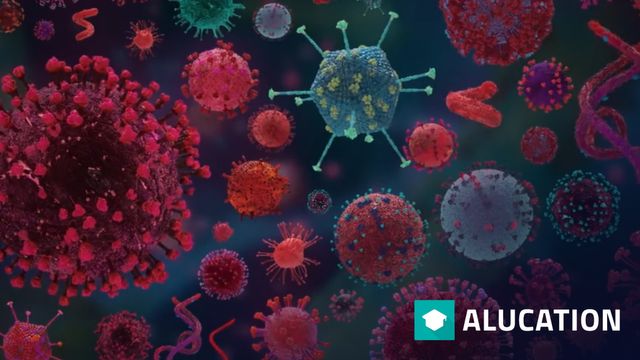
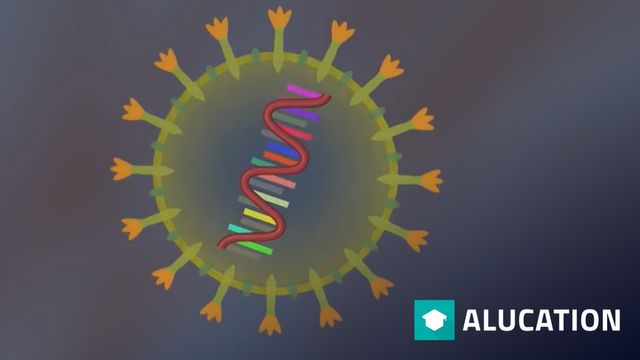
There are probably 100 million different types of viruses. Their attacks always follow the same pattern. The viruses attach to a cell, transfer their genetic material and force the host cells to produce new viruses. Author: 3sat/nano/Docstation/Johan von Mirbach/Anna Grün/Riccardo Giese/Nico Schleg

Anisakis worms - masters of reproduction

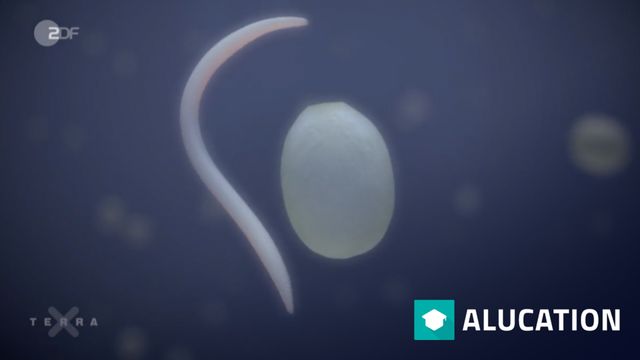
The parasites begin their life cycle as eggs. They reach the digestive tract of whales and dolphins via several intermediate hosts as adult worms. The eggs laid there by the females are returned to the sea with the excrement of the host. Author: ZDF/Terra X/Group 5 Film Production/Tamar Baumgarten/

The British Covid-mutant and its effects

All viruses change over time. When a virus captures a host cell, it allows its genome to replicate, and new variants with small changes emerge. However, the English variant of Sars-Cov-2 has an unusually large number of mutations. Authors: ZDF/Terra X/WENDEVARGA/Christine Haak, Frank Siegwart, Albr

The Powerhouse of the Cell

Mitochondria play host to one of the most important processes in your body, called cellular respiration. Taking in glucose and oxygen, mitochondria produce energy, which they capture and package as energy-rich molecules of ATP. This video describes the structure and functions that give mitochondria

Shape Shifters: Shape-Memory Alloys and Polymers

In this video excerpt from NOVA’s "Making Stuff: Smarter", host and New York Times technology columnist David Pogue visits Virginia Tech, where scientists are developing an artificial jellyfish that will act as an inconspicuous motion-detecting buoy for the Navy. The jellyfish is propelled by a shap

Making Boats Fly

Learn how advances in technology allow boats to go faster than ever before in this video from NOVA: “Making Stuff Faster.” Host and technology columnist David Pogue examines two factors that limit speed—energy and resistance—and describes how Oracle Team USA maximizes the speed of its boat. Instead

Wild-Inspired Robotic Arms

Learn how one company took inspiration from nature to reinvent the robotic arm in this video excerpted from NOVA: “Making Stuff Wilder.” Host and technology columnist David Pogue meets with engineer Heinrich Frontzek to find out about the Bionic Handling Assistant—a machine modeled after an elephant