Search results for “moon colony”

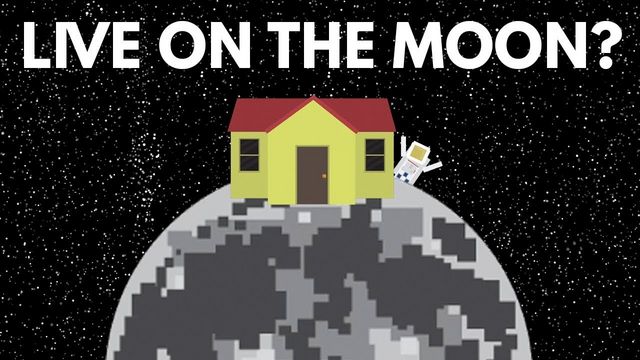
Why Can't We Live On The Moon?

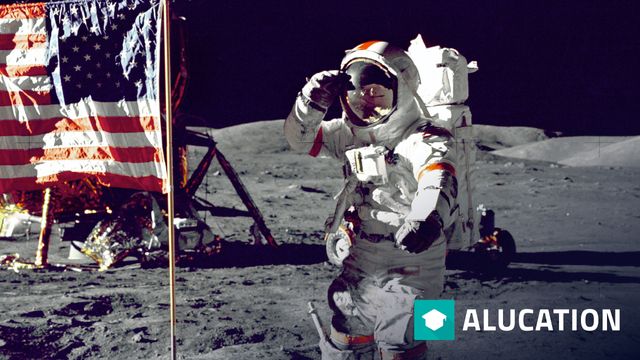
We could try living on the moon ... but it might not be a good idea. Click here to see more videos: https://alugha.com/LifeNoggin Follow Life Noggin! Facebook: https://www.facebook.com/LifeNoggin/?ref=br_rs Instagram: https://instagram.com/lifenoggin/ Twitter: https://twitter.com/lifenoggin Offi
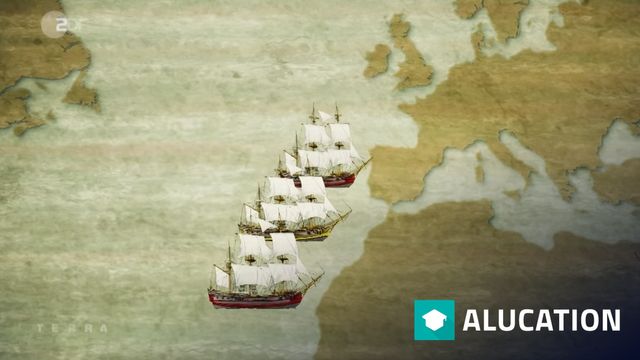
The history of colonialism

The history of European colonialism began about 500 years ago. At that time, powerful people from Europe sent sailors all over the world to occupy large territories. They called these territories "colonies". Author: ZDF/Pur+/gomie production GmbH/Nadja Stein/Richard Bade/Manos Dosis/Maximilian Tr

Why Doesn't the Moon Fall Down?

Astronomer Doris Daou explains how the forces of speed and gravity keep the Moon in a constant orbit around Earth in this animated video segment adapted from NASA. The Moon, Earth's natural satellite, seems to hover in the sky, unaffected by gravity. However, the reason the Moon stays in orbit is pr

ScienceCasts: Summer Blue Moon

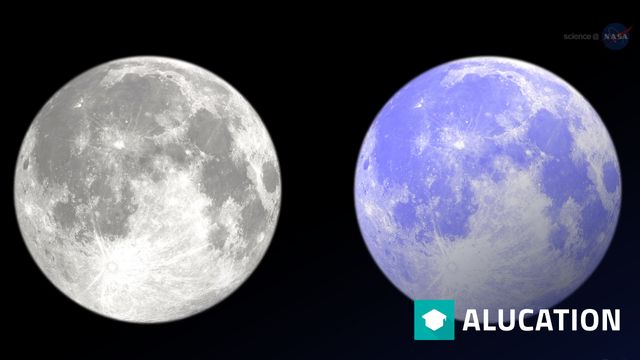
The second full Moon of July is just around the corner. According to modern folklore, it is a "Blue Moon." Visit http://science.nasa.gov/ for more. Click here to see more videos: https://alugha.com/NASA This video is from 2015

Evolution of the Moon

Learn about the evolution of Earth's moon, from its initial formation to its current state, in this video from NASA. Real satellite imagery, as well as simulations, explore how the Moon has changed over time. The video looks at how the Moon likely formed about 4.5 billion years ago, how impacts from

ScienceCasts: Amazing Moons

When the Space Age began, explorers were eager to visit the planets of the solar system. As the years have passed, however, astronomers have realized that the moons of the solar system may be even more interesting. Visit http://science.nasa.gov/ for more. Click here to see more videos: https://alu

Tour of the Moon | NASA Planetary Sciences

Take a tour of the Moon's surface features in this video from NASA. Images and topographic maps show craters, rocks, mountains, basins, and valleys, including the Orientale basin, Shackleton crater, South Pole-Aitken basin, Tycho crater, Aristarchus plateau, Mare Serenitatis, Compton-Belkovich volca

Mapping the Moon's Gravity | NASA Planetary Sciences

Launched in September 2011, find out about the Gravity Recovery and Interior Laboratory (GRAIL) mission to measure the gravitational field of the Moon and study how the Moon developed over time. Animations illustrate technical aspects of the mission's design, including the launch, orbital insertion

Investigating the Moon's Interior | NASA Planetary Sciences

Discover how scientists plan to use data from the GRAIL mission and a map of the Moon's gravitational field to learn about its internal structure. By comparing data about the Moon's gravity with information about its topography, scientists can gain a better understanding of the Moon's formation and

Saturn's Rings and Moons | NASA Planetary Sciences

Explore the rings and moons of Saturn through images from the Cassini spacecraft. Saturn's rings were discovered in 1610 by Galileo Galilei, although he did not see enough detail to know what they were. In 2004, the Cassini spacecraft began capturing unprecedented images of Saturn's atmosphere and t

Jupiter and Its Icy Moons

Produced by Science Office for Europlanet 2020 RI. http://www.scienceoffice.org/ Europlanet 2020 RI http://www.europlanet-2020-ri.eu/ Europlanet Outreach http://www.europlanet-eu.org/ Europlanet Social Media: Twitter: https://twitter.com/europlanetmedia Facebook: https://www.facebook.com/europ