Search results for “smd”
ScienceCasts: The Mystery of Coronal Heating
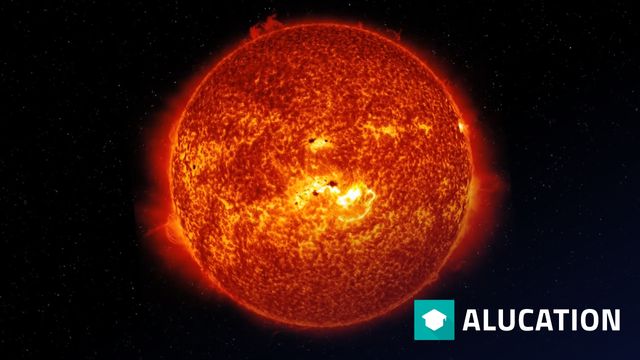
Observations by NASA's IRIS spacecraft suggest that "heat bombs" are going off in the sun's outer atmosphere, helping to explain why the solar corona is so mysteriously hot. Click here to see more videos: https://alugha.com/NASA Visit http://science.nasa.gov/ for more. https://iris.gsfc.nasa.gov/
ScienceCasts: The Hidden Meltdown of Greenland
NASA-supported researchers have found that ice covering Greenland is melting faster than previously thought. The action is happening out of sight, below the surface. Visit http://science.nasa.gov/ for more. Click here to see more videos: https://alugha.com/NASA This video is from 2015
NASA ScienceCasts: Two Sides of the Same Star
A neutron star comes from a large star that has run out of fuel, and exploded as a supernova. First it becomes a radio pulsar and later becomes a magnetar. Or maybe it’s the other way around! NASA Science: http://science.nasa.gov/ Click here to see more videos: https://alugha.com/NASA

ScienceCasts: Escape of the Destructive Electrons
Visit http://science.nasa.gov/ for more. Earth is surrounded by electrons that can be disruptive to our technology. NASA is using high-altitude balloons and spacecraft to monitor and understand these particles in the radiation belts surrounding our planet. Click here to see more videos: https://al
ScienceCasts: Taking the Surprise out of Hurricane Season
NASA is helping improve the ability of forecasters to predict hurricane intensity by flying missions into and above the hearts of powerful storms. Visit http://science.nasa.gov/ for more. Click here to see more videos: https://alugha.com/NASA
ScienceCasts: Twinkle Twinkle GPS
Dynamic bubbles of ionization in Earth's upper atmosphere can cause GPS signals to "twinkle" like stars, affecting the quality of navigation on Earth below. NASA recently conducted a mission called CINDI to investigate this phenomenon. Visit http://science.nasa.gov/ for more. Click here to see mor
ScienceCasts: The 2016 Transit of Mercury
Click here to see more videos: https://alugha.com/NASA Visit http://science.nasa.gov/ for more. On May 9th (2016), Mercury will move across the face of the sun, offering a rare viewing opportunity for professional astronomers and backyard sky watchers alike. 2016 Mercury Transit: http://mercurytr
ScienceCasts: Roundworms Have the Right Stuff
The common roundworm shares a surprising amount of genetic material with humans - enough, in fact, to make them the good substitutes for astronauts in low-gravity medical studies. Visit http://science.nasa.gov/ for more. More on Space Aging! http://www.nasa.gov/mission_pages/station/research/news/
ScienceCasts: New Horizons Discoveries Keep Coming
New Horizons is on its way to new discoveries deep in the Kuiper Belt – a region inhabited by ancient remnants from the dawn of the solar system. Visit http://science.nasa.gov/ for more. Click here to see more videos: https://alugha.com/NASA
NASA ScienceCasts: Something for Every Sky Watcher
The July 27th night sky offers treats for sky watchers -- and listeners -- around the globe. Click here to see more videos: https://alugha.com/NASA