Search results for “Cracks”

Mold in the Home

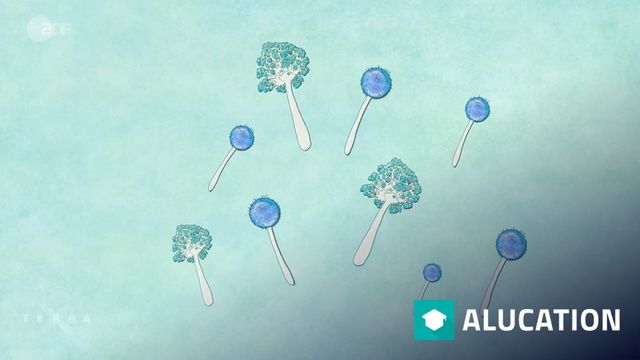
Mold is a microorganism that forms a typical fungal network. It mainly reproduces through spores. The slightest breeze carries these spores everywhere, which is how they end up in our homes. Here, they usually find ideal conditions. Authors: ZDF/3sat/nano/Autorenkombinat/Josephine Blume, Holger Bar

How caves were created in the Caribbean

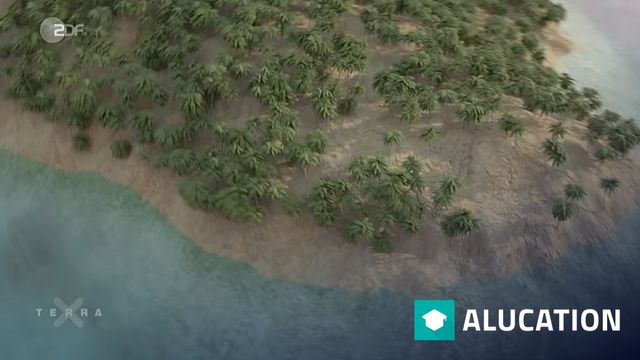
Glaciation during the ice ages caused the sea level to drop. Parts of the limestone reef platforms that form the bedrock of the Bahamas fell dry. Rain penetrated through cracks and dissolved the limestone, creating widely ramified karst caves. Author: ZDF/Terra X/R. Marel/S. Hillmann/C. Gerisch/A.

Human Genome Project

In this video segment from NOVA: "Cracking the Code of Life," Eric Lander of MIT's Whitehead Institute explains the effort to decode the human genome—from motivation to process to importance—and explains what a genome map can and cannot yet do for science. This video is available in both English and

Draw boundaries: Who sets limit values

Radon is a radioactive noble gas. It can enter our homes through cracks – if it accumulates there and we breathe it in for a long time, it can cause cancer. Radon is actually everywhere, but it is distributed differently from region to region. To determine whether you have radon in the house, only m