Search results for “field data”

Open Data - explained in a nutshell

Data is everywhere, but what is open data? And how can people and society benefit from it? This video gives you a quick and easy explanation of its definition and uses. Read more about open data here: https://en.wikipedia.org/wiki/Open_data Wikidata: https://www.wikidata.org/wiki/Wikidata:Main_Page

How to Donate Data to Wikidata

This video briefly explains how data donations to Wikidata, a multilingual free knowledge base, work. Authors: Elisabeth Mandl, Jens Ohlig, Ilya Kompasov and Theresa Sieder for Wikimedia Deutschland. This video was produced in cooperation with Wikimedia Germany and Wikidata. Sources: https://www.

HOW DO I GET INTO LSE FOR DATA SCIENCE

Join Profs founder and admissions expert Richard Evans as he shares his expert, insider knowledge on how to get into LSE to study BSc Data Science. Richard has helped over 1,000 students apply to top universities in the UK. Get your FREE personal statement template and applications cheatsheet 85% o

Earth's magnetic field

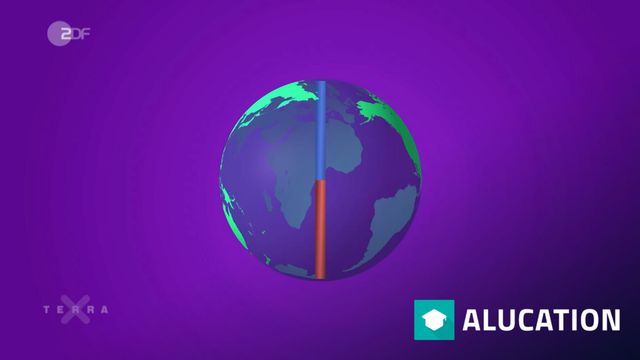
You can imagine Earth’s magnetic field as if there were a giant bar magnet inside the planet. Because it has two poles, it’s called a dipole. Around such a magnet, so-called field lines form. Authors: ZDF/Terra X/Bilderfest/Tillman Graach/Moritz Krause/Benjamin Calliari-Herzberg/Maximilian Heß Tra

Electromagnetic fields of mobile communications

Being able to make phone calls anywhere and at any time has now become a matter of course. Mobile communications are now part of our everyday lives. But how does mobile communications work? How does it affect humans? How can we protect ourselves from the effects of mobile communications? The video

Measuring Mars's Magnetic Field | NASA Planetary Sciences

Learn about the Mars Atmosphere and Volatile EvolutioN (MAVEN) mission to Mars in this video from NASA's Goddard Space Flight Center. Mars does not have a global magnetic field like Earth but does have patches of magnetic fields. Scientists use magnetometers to study the planet's magnetic anomalies.